Working Principle of Dalian Coal Shearers
大连采煤机的工作原理
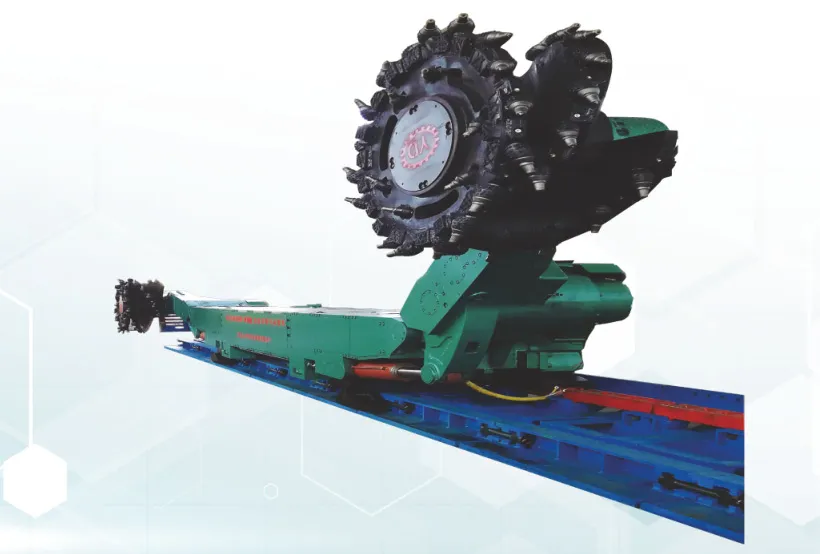
The working principle of coal shearers revolves around three core stages: "power drive - coal cutting - coal conveying". Through coordinated operation of various systems, underground coal seams are efficiently converted into transportable coal materials. The essence is using mechanical force to break coal structure strength while auxiliary systems ensure continuous operation.
采煤机的工作原理围绕"动力驱动-截割破煤-煤块输送"三大核心环节展开,通过各系统协同运作,将井下煤层高效转化为可运输的煤料,其本质是利用机械力突破煤体结构强度,同时配合辅助系统保障作业连续。
First is the drive logic of the power transmission system. Shearers typically use underground high-voltage cables (usually 3300V or 1140V) as power source, converting electrical energy to mechanical energy through explosion-proof motors. Motor output passes through reducers (gear or planetary structure) to reduce speed and increase torque, then is distributed to two key actuating components: traction mechanism driving movement along conveyor guides for continuous advancement, and cutting drum rotating at 30-50r/min for core coal-breaking power.
首先是动力传递系统的驱动逻辑。采煤机通常以井下高压电缆(电压多为3300V或1140V)为电源,通过防爆电机将电能转化为机械能。电机输出的动力经减速器(采用齿轮传动或行星传动结构)降低转速、提升扭矩后,分别传递至两个关键执行部件:一是牵引机构,驱动采煤机沿刮板输送机的导轨往返移动,实现沿工作面的连续推进;二是截割滚筒,带动滚筒以30-50r/min的转速高速旋转,为破煤提供核心动力。部分大功率采煤机还会配备液压系统,通过液压泵输出高压油,控制滚筒升降、机身调平等动作,适配不同煤层厚度。
Second is the core coal cutting process. Cutting drum surfaces are equipped with spiral-arranged hard alloy picks (hardness up to HRC60+). When drum rotates, picks cut into coal seams at specific cutting angles. The high pressure at pick tips (up to hundreds of MPa) destroys coal's internal bonding force, fracturing seams into small pieces. Spiral blades generate axial thrust, pushing broken coal toward conveyor chutes. Drum design typically uses "double spiral" structure with left and right drums conveying coal toward center.
其次是截割破煤的核心过程。截割滚筒表面装有呈螺旋排列的硬质合金截齿(硬度可达HRC60以上),当滚筒旋转时,截齿以一定的切削角度切入煤层。截齿尖端的高压(可达数百兆帕)会破坏煤体的内部结合力,使煤层碎裂成小块;同时,滚筒的螺旋叶片会随旋转产生轴向推力,将破碎后的煤块沿叶片导程推向刮板输送机的溜槽内。为提升破煤效率,滚筒设计通常采用"双螺旋"结构,左右两个滚筒分别向中间输送煤块,避免煤料堆积在机身下方,确保截割与输送同步进行。
Then is the coordinated operation of auxiliary systems. Cooling system delivers cooling water to motors, reducers, and drums through pumps, absorbing heat to prevent high-temperature damage. Spray dust suppression system sprays mist near drums to suppress coal dust. Walking speed (typically 0.5-5m/min) can be adjusted based on coal hardness—reduce speed for hard seams, increase for soft seams.
然后是辅助系统的协同配合。冷却系统通过水泵将冷却水输送至电机、减速器及截割滚筒,吸收机械运转产生的热量,防止部件因高温损坏;喷雾降尘系统则在滚筒附近喷洒水雾,抑制截割过程中产生的煤尘,改善井下作业环境。此外,采煤机的行走速度(通常为0.5-5m/min)可根据煤层硬度调节——面对硬煤层时降低速度,确保截齿充分破煤;软煤层则提升速度,提高作业效率,整个过程通过操作员控制手柄或自动化系统实现精准调控。
From electrical to mechanical energy conversion, to physical interaction between picks and coal seams, the shearer's working principle is essentially a multi-system coordinated "energy transfer - work coal breaking - material conveying" process, with precise cooperation at each stage achieving mechanized, efficient underground mining.
从电能到机械能的转化,再到截齿与煤层的物理作用,采煤机的工作原理本质是多系统协同的"能量传递-做功破煤-物料输送"过程,每个环节的精准配合,实现了井下煤层的机械化、高效化开采。